
Best ERP Software for Small Manufacturing Companies in India

If you run a small manufacturing unit in India, you already know the daily juggling act — tracking raw material stock, chasing production schedules, managing GST invoices, and trying to keep the accounts team and the shop floor on the same page. Most small manufacturers still rely on spreadsheets, WhatsApp updates, and separate billing software to hold all of this together. It works, until it doesn't.
This is exactly the gap that ERP (Enterprise Resource Planning) software is built to close. In this guide, we break down what ERP actually does for a small manufacturing business, the features that matter most, and how the top ERP options in India compare — so you can pick a system that actually fits your factory, not just a big brand name.
What Is ERP Software and Why Does It Matter for Manufacturers?
ERP software brings every part of your business — inventory, production, purchase, sales, accounts, and compliance — onto a single platform. Instead of your production manager checking stock in one register, your accountant tracking GST in another tool, and your sales team maintaining a separate order sheet, everyone works off the same live data.
For a small manufacturing company, this matters because manufacturing has more moving parts than trading or services. A single wrong entry in your Bill of Materials (BOM) can throw off raw material purchase, delay production, and push back a delivery date — all from one mistake. ERP software reduces this risk by connecting departments automatically.
Why Small Manufacturers in India Need ERP in 2026
GST and e-invoicing compliance — Indian tax rules change frequently, and manual compliance is time-consuming and risky.
Multi-level Bill of Materials (BOM) — manufacturing rarely involves a single-step process; ERP handles multi-stage production and sub-assemblies.
Real-time inventory visibility — know exactly what raw material and finished stock you have, across locations, without a physical count.
Production planning — plan raw material procurement based on actual production schedules rather than guesswork.
Reduced dependence on manual reports — owners and managers get real-time dashboards instead of waiting for end-of-day updates.
Better cost control — track the real cost of production per batch or per order, not just an estimate.
Key Features to Look For in an ERP for Small Manufacturing
Before comparing software, it helps to know what actually matters for a small manufacturing setup:
Inventory and warehouse management – stock tracking across raw material, WIP, and finished goods
Production and BOM management – single or multi-level BOMs, job cards, and sub-contracting support
GST-ready billing and e-invoicing – built for Indian tax compliance out of the box, including GSTR-1 and GSTR-3B
Industry-specific workflows – textile, diamond & jewelry, embroidery, and FMCG manufacturing all have very different shop-floor needs; a generic ERP often means expensive customisation later
Affordable, transparent pricing – no hidden implementation costs that eat into a small business budget
Cloud, on-premise, or hybrid access — so owners can check business data from a phone without depending only on a local server
Local support – someone who understands Indian compliance and your industry, not just a generic help desk
PlusERP: A Manufacturing ERP Built for Indian SMEs
PlusERP by Digital Dreams Infotech is built specifically around the problems small Indian manufacturers deal with every day, rather than being a global ERP adapted for local use. It brings accounting, GST billing, inventory, purchase, payroll, POS, and warehouse management into one platform, with dedicated modules for sectors like textile mills, embroidery units, diamond & jewelry manufacturing, and FMCG production — the kind of industry-specific detail generic ERPs often miss.
Backed by 25+ years of implementation experience and over 1,000 businesses across Surat and Gujarat, PlusERP is designed so a small manufacturing unit can go live without the long, expensive rollout typical of enterprise ERP systems.
What PlusERP covers for manufacturers:
GST-ready billing with automated e-invoicing and e-way bill generation
Multi-level BOM, job card tracking, and production monitoring
Real-time inventory and warehouse management across multiple locations
Cloud, on-premise, or hybrid deployment — your choice
Industry-specific modules for textile, embroidery, diamond, and FMCG manufacturing
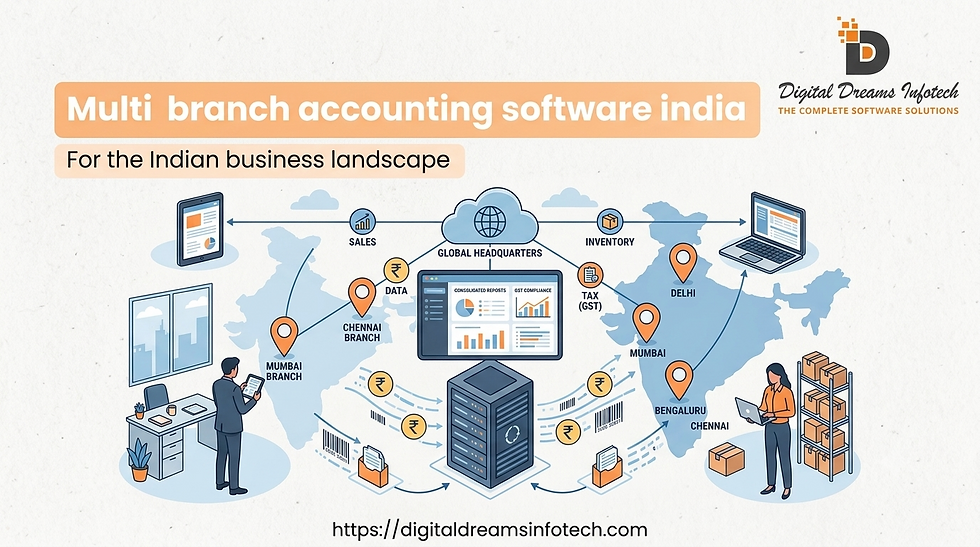
Payroll, POS, and multi-branch/multi-company consolidated reporting
Onboarding and support from a locally based implementation team
How PlusERP Compares to Other Popular ERP Options in India
Here's how PlusERP stacks up against the systems small manufacturers commonly consider:
PlusERP vs. TallyPrime
TallyPrime remains the most familiar accounting software in India and works well for GST billing and basic bookkeeping. But it isn't built for manufacturing — multi-level BOM, job card tracking, and industry-specific production workflows need add-ons or workarounds. PlusERP gives you that manufacturing depth natively, alongside the accounting and GST compliance you're used to from Tally-style tools.
PlusERP vs. Busy Accounting Software
Busy is a solid step up from pure accounting software and is popular with trading and manufacturing MSMEs. PlusERP goes further by combining accounting, GST billing, inventory, barcode POS, warehouse management, and industry-specific modules in one system — so you're not stitching together separate tools as your operations grow.
PlusERP vs. Marg ERP
Marg is well established in retail, distribution, and pharma/FMCG billing. For manufacturers specifically, PlusERP offers deeper production and BOM management alongside GST compliance, plus industry-built modules for textile and diamond manufacturing that Marg doesn't specialise in.
PlusERP vs. Generic Cloud ERPs (Zoho, Odoo, ERPNext)
Global modular platforms like Zoho, Odoo, and ERPNext are flexible and can technically be configured for manufacturing. But that configuration usually means developer time, ongoing customisation, and support that isn't built around Indian compliance or local industry practices. PlusERP is ready to use out of the box for Indian manufacturing SMEs, with GST compliance and industry workflows already built in — and a local team behind it.
PlusERP vs. Enterprise ERP (SAP Business One, Oracle NetSuite)
SAP Business One and NetSuite are powerful, but the licensing cost, implementation timelines, and complexity are built for businesses with a much bigger budget and IT team than most small manufacturers have. PlusERP delivers the core capabilities a small manufacturer actually needs — inventory, production, GST billing, payroll — without the enterprise price tag or months-long rollout.
How to Choose the Right ERP for Your Manufacturing Business
There's no single "best" ERP for every business — the right choice depends on a few honest questions:
What's your team size and budget? A 5-person unit doesn't need the same system as a 50-person factory.
How complex is your production process? Single-step production needs less than multi-level BOM with sub-contracting.
Do you need GST and e-invoicing built in, or can you manage that separately?
Does your industry need specific workflows — like fabric and job-card tracking for textile, or grading and polishing stages for diamond manufacturing?
Will your team actually use it? The most feature-rich ERP is useless if your staff finds it too complex.
Can it grow with you? Look for a system where you can add users, branches, and modules later instead of switching platforms in two years.
A good approach is to shortlist your top 2–3 options, request a live demo with your own business data, and involve your production and accounts teams in the final decision — they're the ones who'll use it daily.
Final Thoughts
ERP adoption among small manufacturers in India is still catching up, even as sectors like textile, diamond, and FMCG manufacturing push hard toward digital operations. The businesses that adopt the right ERP early are consistently seeing better delivery timelines, tighter cost control, and fewer production surprises. For a small manufacturing company, the goal isn't to pick the biggest global name — it's to pick a system built for how Indian manufacturing actually works.
Ready to see it in action? Book a free PlusERP demo with Digital Dreams Infotech and see how a GST-ready, industry-specific ERP can run your production, inventory, and accounts from one platform — in as little as 30 days.
Want more guides like this? Add Digital Dreams Infotech as a preferred source on Google to see more of our ERP and accounting insights in your search results — click below.

Comments